
Geometry always seems to sneak up. You’re wrapping up decimals, jumping into test prep, and then your pacing guide suddenly says: “Teach all of geometry in two weeks.” If you’ve ever found yourself Googling how to teach geometry without rushing while flipping through anchor charts and silently panicking—you’re not alone.
This unit always shows up at the most chaotic time of year. There’s barely time to say “acute angle,” let alone build deep understanding. The standards look simple on paper, but real geometry instruction requires spatial reasoning, visual models, vocabulary, and a lot of discussion—and none of that works well in a sprint.
Here’s the good news:
Even with limited time, you can teach geometry conceptually and confidently—without rushing, cramming, or cutting corners. And your students can walk away with real understanding, not just memorized shape names.
In this post, I’ll walk you through how to simplify your geometry unit, focus on what really matters, and make it feel low-stress for you and your students.
Why Geometry Feels So Rushed (and Why It’s Not Your Fault)

Let’s be honest—teaching geometry in upper elementary often feels like a last-minute cram session.
You’re balancing test prep, review units, spring field trips, and behavior spikes. Then, right when attention spans are tanking and your time is stretched thin, the pacing guide drops this bomb: “Teach all geometry standards in two weeks.”
So what happens?
- You start fast-tracking through lines, angles, and shapes.
- Students are copying definitions, not understanding them.
- You skip hands-on models because there’s just no time.
- And when it comes to symmetry or classification? Cue the blank stares.
The result? Surface-level learning and shaky retention.
You know your students need more time to explore spatial reasoning, classify shapes, and build meaning, but time just isn’t on your side.
What’s worse: geometry is foundational. If they don’t truly understand it now, it shows up again next year—when they’re even more behind.
That’s why rushing through geometry isn’t just stressful—it creates long-term gaps.
But you can break the cycle, even with limited time.
A Smarter Way to Teach Geometry Without Rushing
Let’s be real—most geometry units in upper elementary are wildly under-paced. You’re handed a pacing guide that gives you two weeks (if you’re lucky) to teach lines, angles, shapes, symmetry, perimeter, area, and volume… all while juggling test prep.
But teaching geometry without rushing is possible—if you focus on depth, not breadth.
Here’s how I make geometry feel doable for me and meaningful for my students:
1. Prioritize the Most Transferable Geometry Concepts
Instead of trying to “cover it all,” I focus on the geometry standards that:
- Show up on state tests (let’s be honest—this matters)
- Connect to future grades (like angle measurement, classification, and spatial reasoning)
- Build flexible thinking, not just vocabulary memorization
In 3rd–5th grade, these include:
- Identifying and measuring angles
- Classifying shapes by their attributes
- Understanding lines (parallel, perpendicular, intersecting)
- Exploring symmetry and congruence
When you zoom in on the standards that spiral, your students get more out of every activity—and you avoid the overwhelm of trying to hit everything in one week.
2. Use Visual, Hands-On Geometry Activities
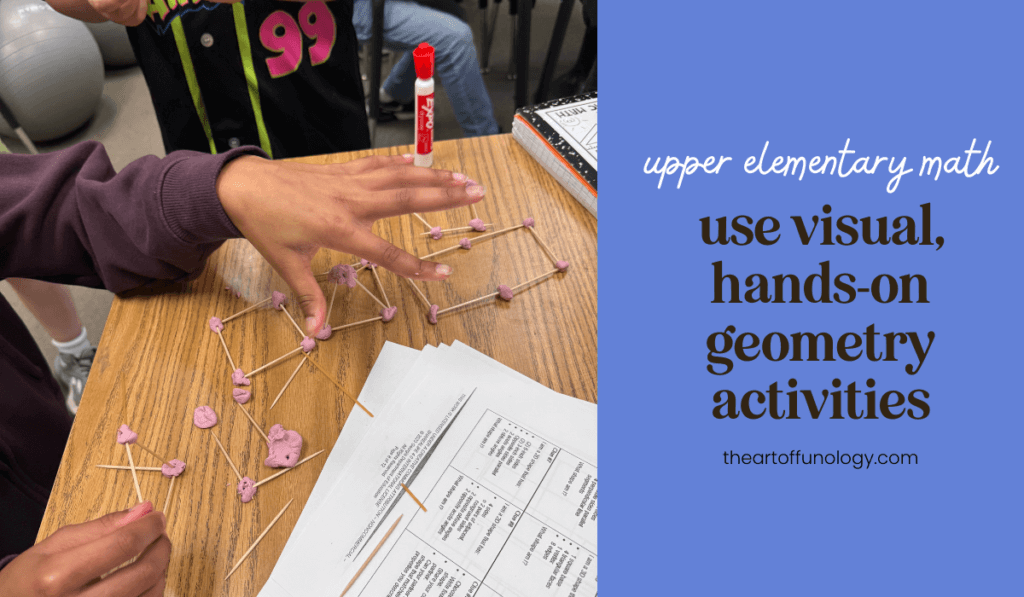
When students see the concepts, they retain them. That’s why every geometry unit I teach starts with manipulatives and visual references that turn abstract vocab into something concrete:
Angle Sorts
Students cut and match acute, obtuse, and right angles with real-world examples. It builds classification skills without relying on rote definitions.
Symmetry Foldables
Instead of flat notes, students create foldable models that literally show how symmetry works. It’s one of those “aha!” activities that sticks. I like to use the die cut letters from the media center to explore symmetry with my students.
Lines & Angles Puzzles
Interactive activities where students sort, build, or label different types of lines and angles. These feel more like games than lessons—and that’s the point.
All of these resources are no-prep, printer-friendly, and intentionally short—because you don’t need a full 90-minute lesson to teach angles well. You just need the right tools and a clear purpose.
3. Reinforce With Short, Targeted Practice (Not Worksheets for the Sake of It)
Once your students have explored the concept with their hands and eyes, they’re ready to practice—and this is where I avoid the “50 questions on one page” trap.
Instead, I use:
- Quick-checks (5 questions max) to assess understanding
- Exit slips that double as mini anchor charts
- Games or review rounds that give me instant feedback without killing their motivation
These small moves help me stay on track without burning out or boring my class. When I stick to short bursts of intentional geometry practice, it fits into my week—not on top of everything else.
Ready-to-Go Geometry Resources That Actually Work
Want activities that align to standards, keep kids engaged, and still fit inside a tight schedule?
Browse my best-selling, teacher-loved geometry resources here

From angles to symmetry to classification, each resource is:
- Aligned to upper elementary standards
- Focused on visuals and interaction
- Designed to work in tight time frames
These tools make it easy to teach geometry without rushing—and still feel proud of what your students walk away with.
Spotlight: The Geometry Activity That Changed My Whole Unit
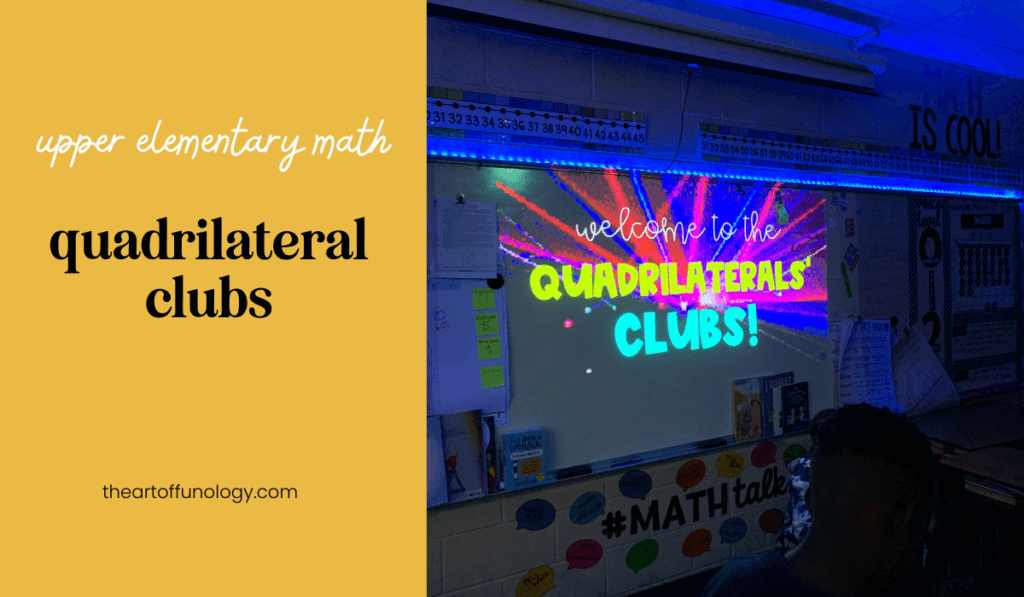
If I had to pick just one geometry resource to use year after year, it would be Quadrilateral Clubs.
This activity is the MVP of my 5th grade geometry unit—and one of the best-selling resources in my entire store.
Instead of handing students another chart of definitions, Quadrilateral Clubs invites them to think like mathematicians. Each “club” has membership rules (like “At least one pair of parallel sides”) and students must sort, justify, and explain which quadrilaterals belong where—and why.
Why it works:
- Encourages math reasoning over memorization
- Reinforces shape classification standards (5.G.3 and 5.G.4)
- Super engaging—students love the club theme and challenges
- Works beautifully for collaborative learning, stations, or test review
I’ve used it in multiple formats: whole class discussion, partner problem-solving, even early finisher extensions. No matter how it’s used, students get it—and retain it.
Pro tip: Use this activity after introducing shape attributes but before formal assessments. It bridges the gap between vocabulary and true conceptual understanding.
What Teachers Are Saying
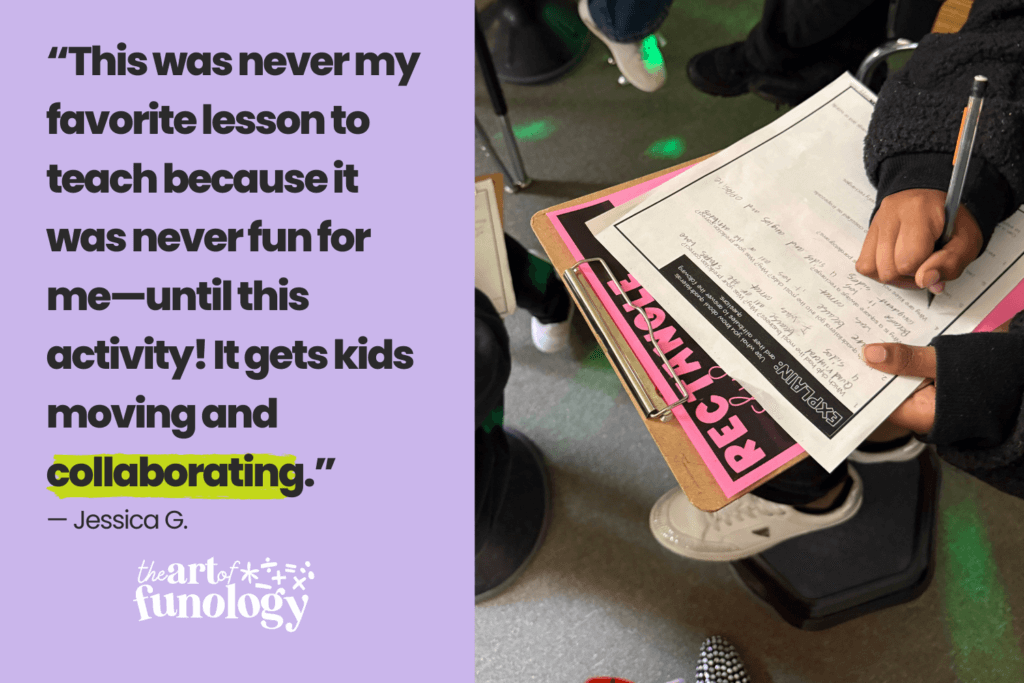
“This was never my favorite lesson to teach because it was never fun for me—until this activity! It gets kids moving and collaborating.”
— Jessica G.
“This was such a fun and effective way to teach quadrilateral classification! The ‘Quadrilateral Clubs’ concept helped my students understand the properties in a creative, memorable way. It aligned perfectly with 5th grade standards and kept everyone engaged. Highly recommend!”
— Diana J.
Why This Geometry Approach Works (Even on a Tight Schedule)
Teaching geometry without rushing isn’t just possible—it’s more effective. Here’s what happens when you slow down just enough and use the right tools:
1. Students Actually Remember What They Learn
Visual, hands-on activities make abstract geometry concepts stick. When students can see and build angles, lines, and shapes, they develop lasting understanding, not just temporary vocabulary memorization.
This means better retention, better test results, and less reteaching later on.
2. It Fits Inside Your Real-Life Pacing Guide
You don’t need to overhaul your schedule to make this work. These geometry resources are intentionally designed to be short, targeted, and no-prep, so you can teach with confidence, even when time is short.
Whether you have 15 minutes or 45, you can still deliver meaningful instruction.
3. Students Feel Successful (Even in a Tricky Unit)
Geometry can be frustrating when it feels like a list of definitions to memorize. But when students engage through puzzles, foldables, sorts, and creative challenges, they build confidence alongside content knowledge.
That confidence pays off—especially during review and assessment season.
4. You Can Spot Misconceptions Quickly
Instead of grading long assignments or wondering who “gets it,” you’ll see thinking in real time. These tools encourage student discussion, self-checks, and collaboration—so you’re not guessing who needs support.
Get the Geometry Resources That Make Teaching Feel Doable
Want ready-to-go tools that help you teach geometry confidently—without blowing up your pacing guide?
Browse my most-loved, low-prep geometry activities right here:
👉 Explore Geometry Resources on TpT
Most popular picks:
- Quadrilateral Clubs – Best-seller for teaching shape classification
- 4th Grade Geometry Google Sheets Pixel Art Bundle (4.G.1-3)– Self-checking geometry activities for the entire unit
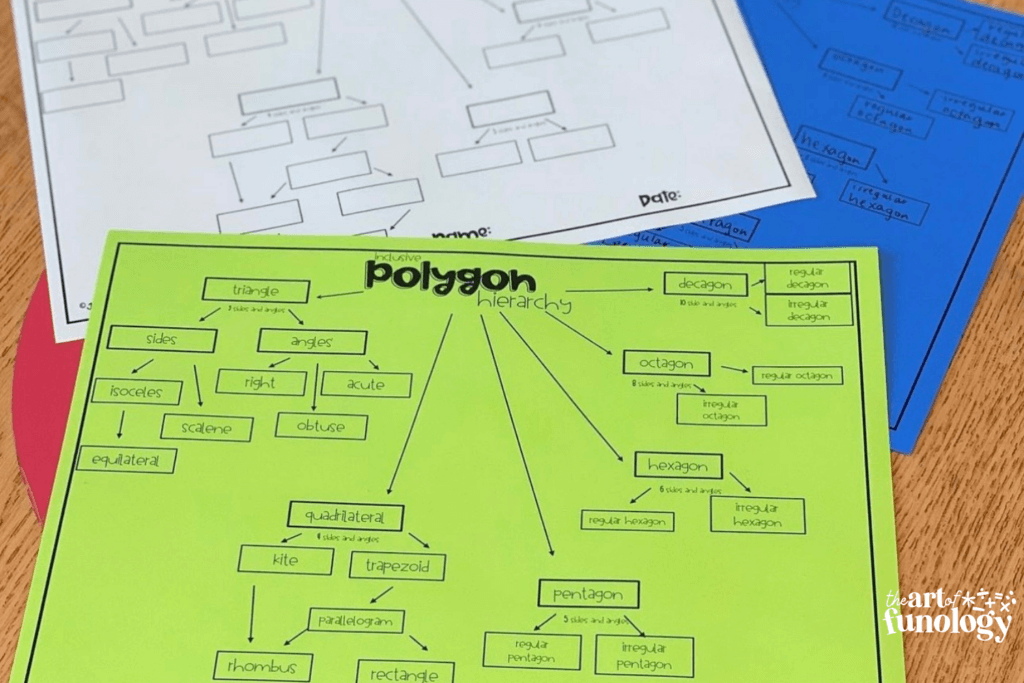
- Inclusive Polygon Hierarchy – A FREE visual anchor tool for students
Whether you’re just getting started or reviewing before the test, these activities are designed to fit into your week without the stress.
Start Small: Grab a Free Geometry Resource
If you’re not ready to dive into a full set of geometry activities yet, start with something simple and high-impact. My Lines & Angles Freebie is a quick win that helps students make sense of geometry vocabulary without overwhelming them.
It’s perfect for:
- Introducing geometry at the start of the unit
- Small group work or intervention
- Warm-ups and exit tickets
- A confidence boost before diving deeper
Get it sent straight to your inbox here: Lines & Angles Freebie
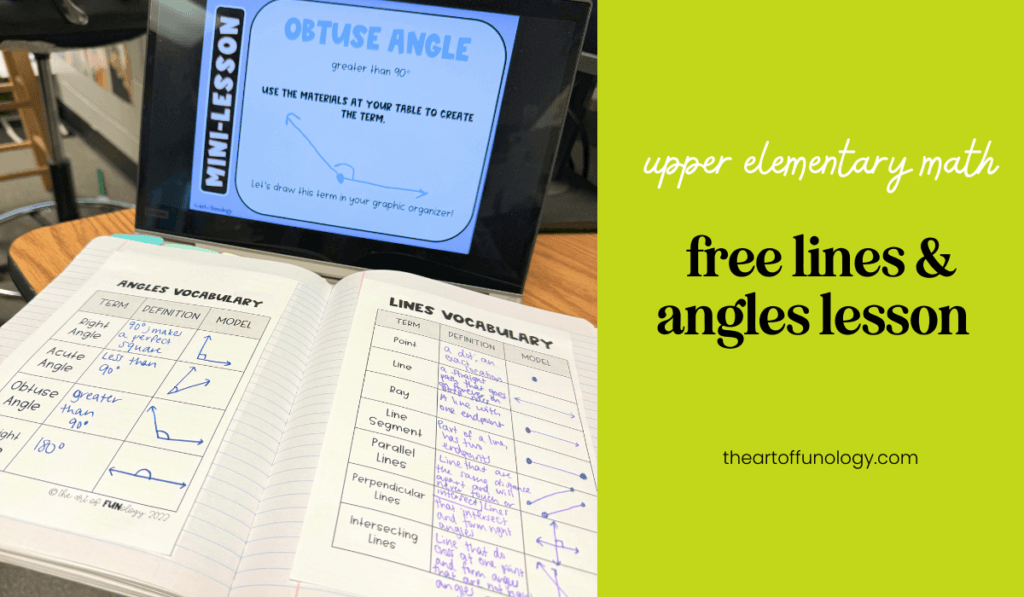
Once you’ve tried it, you’ll know exactly how to build the rest of your geometry unit with clarity and confidence.
You Can Teach Geometry Without the Rush
Teaching geometry in upper elementary doesn’t have to mean cramming, skimming, and hoping for the best. When you zoom in on the most meaningful standards, use hands-on visuals, and reinforce with short bursts of intentional practice, you’re giving students exactly what they need to understand—not just recognize—geometry concepts.
You don’t need more time. You need the right tools, used with purpose.
Let your students build, sort, explore, and discuss. Let yourself move through the unit with clarity and confidence. And let go of the pressure to teach everything in two weeks.
You’ve got this—and I’ve got resources to help make it doable.
Ready to get started? Download a free Lines & Angles activity or explore the full geometry collection to simplify your prep.