If you’ve ever wondered how to talk about math progress with parents during spring conferences—without spiraling into test score disclaimers or second-guessing your own data—you’re not alone.
I still remember my first spring as a departmentalized math teacher. Having over 50 students, a desk full of benchmark reports and sticky notes, and this sinking feeling every time I opened my spreadsheet of scores. I wanted to celebrate growth, explain gaps, and reassure parents—but it felt like I needed a translator, a therapist, and a time machine just to prep.
The truth? Even strong math teachers struggle with parent–teacher conferences when it comes to data.
But it doesn’t have to be that way.
In this post, I’ll share the exact tools and strategies that helped me go from overwhelmed and underprepared to confident and clear. Whether you’re prepping for midyear conferences in 3rd, 4th, or 5th grade, or just want a better way to communicate student growth, I’ve got you.
Let’s talk about math progress—without the panic.
Why Talking About Math Progress with Parents Feels So Hard

Let’s be honest: talking about math data during parent–teacher conferences is one of the most mentally exhausting parts of the job—especially when you teach upper elementary.
It’s not just the pressure of the meeting itself. It’s the buildup to it.
Weeks before conference day, it starts creeping into your mind:
“What am I going to say for this student?”
“Do I even have all the data I need?”
“That benchmark score doesn’t reflect how far they’ve come…”
“What if a parent pushes back?”
You want to be prepared. You want to be honest. And you want to make the most of those 10 precious minutes. But that means gathering and organizing a mountain of information, often across multiple platforms:
- Benchmark data from one portal
- Small group notes in your planner or on sticky notes
- Exit tickets or fluency checks buried in student folders
- IEP goals and intervention notes in separate spreadsheets
- Classroom work samples (some digital, some on paper, some… who knows)
And of course, you can’t just dump raw scores in front of a parent. You need to:
- Write up summaries of each child’s strengths and needs
- Highlight trends that explain the scores and the student’s experience
- Think through what to say if a parent is confused, frustrated, or concerned
- Prepare to justify growth that doesn’t look obvious on paper
- Juggle all this for a class roster that’s 20, 30, maybe even 50+ kids if you’re departmentalized
It’s no wonder so many teachers procrastinate conference prep until the last minute—because it feels like it could take over your entire life.
And the irony? You probably already have the information—you’re just drowning in how to organize it, explain it, and make it feel coherent.
The time, the pressure, the stakes… it adds up fast. And it makes math conference prep feel way harder than it needs to be.
How to Talk About Math Progress With Parents: Tools That Give You Clarity and Confidence
When it comes time to talk about math progress with parents, the solution isn’t more anxiety—it’s structure and clarity. What changed EVERYTHING for me was using tools that not only save time, but guide the conversation so parents leave feeling informed, reassured, and ready to support their students at home.
Below are the specific tools I use (and recommend) that help teachers provide clear, meaningful explanations of math growth, organize data efficiently, and promote student ownership—all while making parent–teacher conferences feel purposeful rather than frazzled.
1. Math Parent–Teacher Conference Form: Your Conversation Roadmap
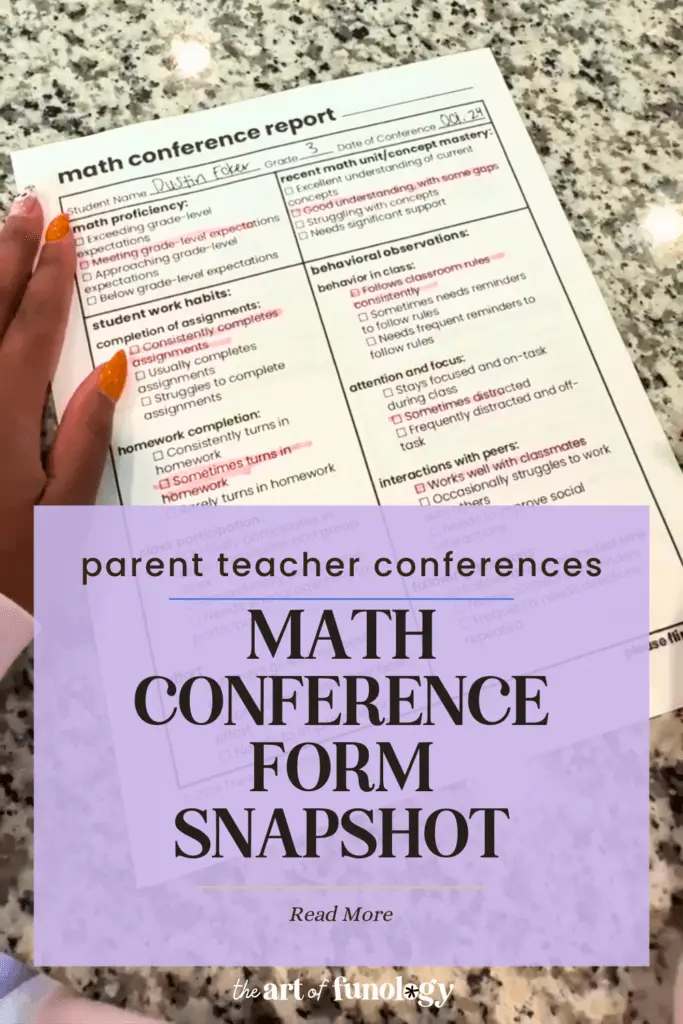
The heart of my conference prep system is the Math Parent–Teacher Conference Form — an easy-to-use, structured report that helps me translate data into words parents understand without scrambling at the last minute. Teachers Pay Teachers
Why this form works:
✔ Guides the conversation instead of leaving it to chance
✔ Breaks student progress into parent‑friendly sections (strengths, growth, next steps)
✔ Offers sections for student “glows,” areas for improvement, and suggested focus work
✔ Print‑ready and easy to fill out during prep time (or even during small group notes)
✔ Designed with math in mind — not just general progress reporting
Think about it: instead of rifling through multiple documents, tabs, and sticky notes, you now have one snapshot that tells the whole story. The format helps you organize real classroom insights (not just test scores) and gives parents something to take home — which keeps the conversation focused on growth and partnership instead of guesswork.
Many teachers say this alone cuts prep time in half—and makes those conversations feel professional and clear. Teachers Pay Teachers
2. Student Self‑Assessments: Behavior, Mindset & Work Habits
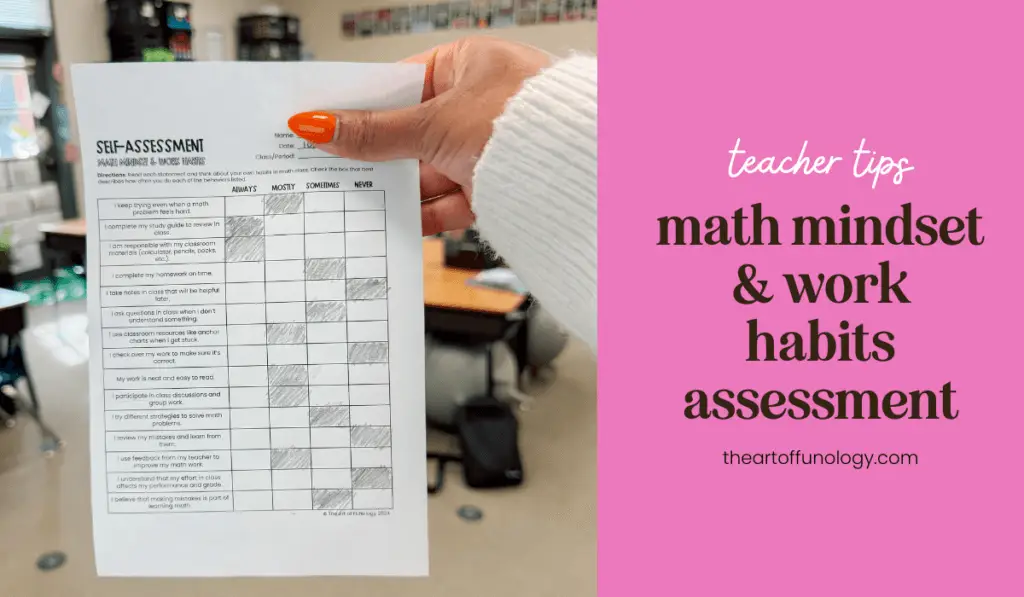
Part of talking about math progress with confidence means showing growth beyond scores — like effort, engagement, and mindset.
That’s where Math Self‑Assessments | Math Mindset & Work Habits come in. These editable, print‑ready forms invite students to rate and reflect on their own learning behaviors — such as responsibility, organization, initiative, and perseverance. Teachers Pay Teachers
How I use these assessments:
- Have students complete them before conferences to gather self‑reflection data
- Compare student‑reported strengths with teacher observations
- Share the results with parents to highlight internal growth (e.g., confidence, strategy use)
You’d be surprised how powerful that reflection can be in a conference. When a student says “I’ve gotten better at explaining my thinking”—and you can show that alongside test data—it gives parents a fuller picture of progress. This helps lessen confusion when benchmark scores don’t tell the whole story.
👩🏫 3. Classroom Behavior & SEL Self‑Assessments: Supporting the Whole Child
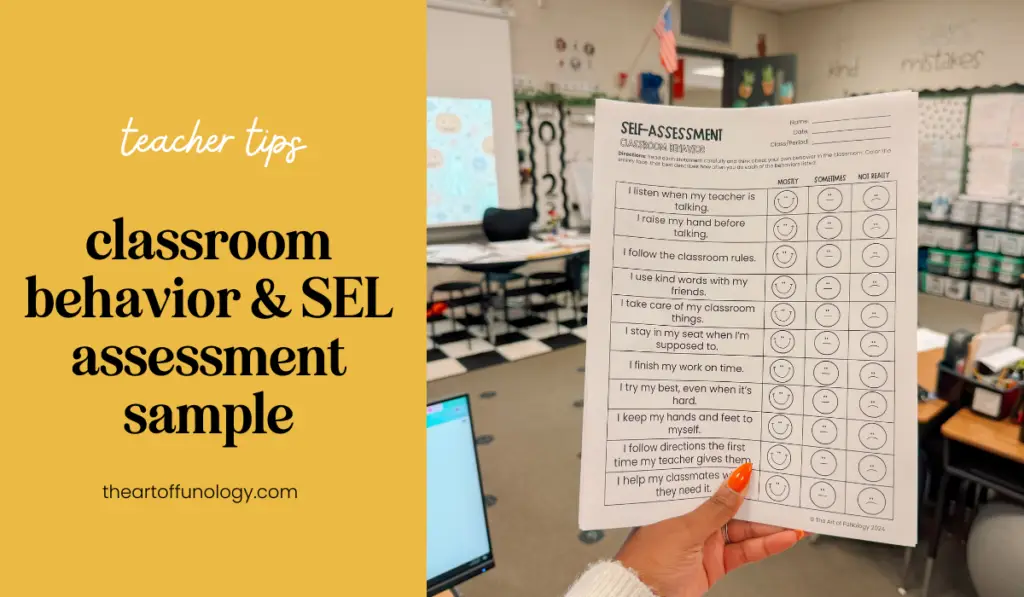
Math progress isn’t just academic — it’s emotional and behavioral too. A student’s comfort with risk, persistence through challenging problems, and classroom engagement heavily influence growth.
Tools like Classroom Behavior Self‑Assessments help you gather data on these areas in advance of conferences. While this resource (and others like it) spans academic behavior and social–emotional learning, the value-add for conferences is huge: you can show parents how their child’s habits support (or hinder) math progress, and you can name specific patterns observed in class. Teachers Pay Teachers
Here’s how you can use it:
✔ Have students complete a quick behavior/self‑reflection ahead of the conference
✔ Summarize patterns (e.g., stays on task, seeks help appropriately)
✔ Share with parents to build collaborative support
This makes your conference feel more holistic and actionable — not just a highlight reel of scores.
4. Use Tools as Conversation Aids — Not Just Forms
When you sit down with parents, these tools become more than printables — they become conversation aids that keep you grounded in clarity:
🟡 Benchmark + Form Data Together
You can say: “This form shows strengths in multiplication, but we’ve noticed (and the student agrees) that division strategy is still developing.”
🔵 Student Self‑Reflection
When paired with your own observations, these self‑assessments open the door for student‑led commentary:
“Sam wrote that he feels more confident with problem explanation — and I’ve seen that in small group.”
🟣 Behavior or Work Habits Insight
A parent might ask: “Why is she struggling with math?”
You can answer: “Her attitude toward challenges has been positive, but we’re seeing some skipped steps in multi‑step problems — here’s how we can focus that at home.”
These nuanced insights help you talk about math progress with parents in a way that is confident, data‑rich, and supportive — not vague or defensive.
🧠 Expert Tip: Use These Tools as Part of a Flow
I like to prep conferences like this:
- Fill out the Math Conference Form first.
- Add student self‑assessment results.
- Include behavior/self‑reflection insights when relevant.
- Circle a few actionable points for the parent to take home (resources, practice ideas, growth goals).
That combination = clarity + confidence. It turns what used to be chaotic prep into a structured, repeatable process that frees up your brain to actually connect with families.
Key Takeaways
- These tools save time by giving you a structured way to gather, organize, and present data.
- They help shift the conversation from test scores to meaningful progress.
- They support student voice and help parents see growth beyond numbers.
With these in your toolkit, you’ll stop wondering how to talk about math progress with parents and start doing it confidently — with clarity, insight, and partnership.
Why These Math Conference Tools Just Work
Let’s zoom out for a second.
The goal of a parent–teacher conference isn’t to impress with data charts or survive 10 minutes without sweating through your cardigan. The goal is to communicate growth, build trust, and collaborate with families.
And the right tools don’t just make that easier—they make it actually enjoyable (yes, really).
Here’s what happens when you use these math data forms and self-assessments to prep for conferences:
1. They Save You HOURS of Prep Time
No more reinventing the wheel for every student. These tools give you:
- A clear structure to organize your thoughts and data
- A consistent format that can be reused across your entire class
- Editable templates so you’re not rewriting the same talking points 30 times
Instead of clicking between 4 different platforms and cross-checking sticky notes, you’re walking in with everything in one place. For departmentalized teachers (hi, 50+ student club 👋), this alone is a game-changer.
🧠 Bonus: These tools also help you prep smarter—not just faster. Because they prompt you to focus on what matters most, you’re not wasting time writing paragraph-long blurbs that no parent reads.
2. They Help You Communicate Growth (Even if Scores Don’t Show It)
Sometimes data doesn’t do your students justice. These tools help you tell the full story:
- Is a student making mindset progress? That shows up in their self-assessment.
- Have they grown in participation or confidence? You’ve got space to record that.
- Did they bomb one test but excel on classwork and small group tasks? This format helps you explain the why behind the numbers.
Instead of just saying, “She’s doing okay,” you’re saying:
“Her fluency scores are still catching up, but she’s using stronger strategies and completing tasks with more independence. That’s a huge win in 4th grade math.”
THAT is the kind of language parents understand—and appreciate.
3. They Put Parents at Ease
Most families don’t speak “benchmark.” They just want to know:
🟢 Is my child doing okay?
🟡 Where can we help?
🟠 Should I be worried?
Your conference tools help them see:
- Concrete evidence of progress
- A teacher who knows their child deeply
- A clear plan for what’s next
Instead of leaving confused or overwhelmed, parents leave with:
- Confidence in you as the expert
- Clarity about their child’s growth
- A roadmap for supporting learning at home
That’s powerful.
And when parents feel confident in you, they’re more likely to partner with you, trust your recommendations, and support follow-through at home.
What Teachers Are Saying About the Parent Conference Reports
One of the best parts about sharing these parent–teacher conference tools has been hearing from teachers who’ve actually used them. Their feedback speaks volumes about how these resources simplify prep, improve communication, and reduce stress during conference season.
Here’s what a few upper elementary teachers had to say:
🗣️ “This is a great resource! My students were very honest and reflective about their behavior, so much so that when I filled out my section of the teacher side, I selected the same or close to the same things that they did. We used it coming back after winter break as a way to see what areas they could improve.”
— Adrienne R., 4th Grade Teacher
🗣️ “I love that I can choose from multiple formats, and also personalize the information needed for students in my class. This made remembering what to discuss with parents super easy and simplified the process of parent conferences.”
— Sarah R.
🗣️ “This is such a time saver as I prepare for parent conferences. I love how you have so many options and that it is editable. Thank you!”
— Kathy G.
Each of these reviews shows that the right tools don’t just help you talk about math progress—they help your students become part of the process, too. Parents leave feeling informed, teachers leave feeling prepared, and students feel seen and supported.
- Confident conversations
- Clear data summaries
- Thoughtful student input
That’s the kind of spring conference experience every teacher deserves.
Make Spring Conferences Easier—Without Starting From Scratch
If you’re ready to make your spring parent–teacher conferences smoother, more efficient, and way less stressful…
Check out the editable Parent–Teacher Conference Tools on TpT
So, this resource is perfect if:
- You’re departmentalized with 40+ students
- You’re tired of digging through test data and anecdotal notes
- You want a parent-friendly way to talk about math progress, even when scores don’t tell the whole story
These forms and tools make your conversations smoother, more professional, and way less stressful.
Want a Free First Step? Start with the Math Small Group Planner
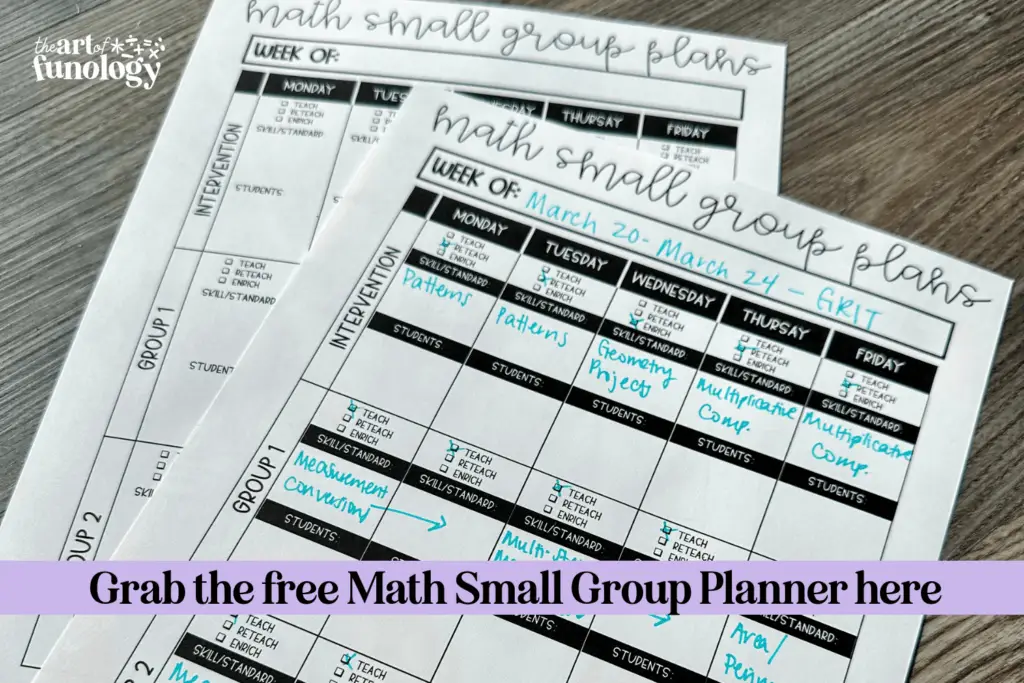
If you’re not quite ready to dive into full conference prep, start small with my most-requested organizational freebie:
Grab the free Math Small Group Planner here
This simple tool helps you:
- Organize your small group notes and observations
- Spot trends in student growth
- Get a jumpstart on data-driven conferencing
Use the form below to get instant access to your download:
Wrapping Up: You Can Confidently Talk About Math Progress With Parents
Here’s the truth:
Talking about math progress with parents doesn’t have to feel overwhelming.
You don’t need to memorize every benchmark. You don’t need to over-explain your teaching.
With a few smart tools—like structured conference forms, simple data trackers, and visual ways to show growth—you can walk into those spring meetings feeling calm, collected, and confident.
You know your students. You do have the data.
Now you’ve got a way to pull it all together and communicate it clearly.
What to do next:
✔️ Prep with a system that saves time and shows student growth
✔️ Start organizing your math small group data with a free planner
✔️ Show up to spring conferences feeling like the expert you already are
You’ve got this.
And if you need a little support, I’ve got tools that are ready when you are.
P.S. Don’t forget to share this post with a teammate who could use some midyear math support too.
You Might Also Like
If you found this post helpful, here are a few others that can support your upper elementary math planning and instruction:
-
Why I Quit Doing Math Centers: How I Run Independent Math Time Without Rotations
A look at how simplifying your math block can actually lead to more meaningful student growth — no more chaotic rotations. -
5 Ways to Use Pixel Art in Your Math Block
Fun, engaging strategies to build math fluency and confidence using pixel art activities students love. -
Back-to-School Math Activities That Build Community and Confidence from Day 1
Start the year strong with collaborative activities that set the tone for math success. -
How to Set Up a Math Block That Works (Without the Overwhelm)
Streamline your instruction and planning with a framework that gives you structure without rigidity.